Share to slack
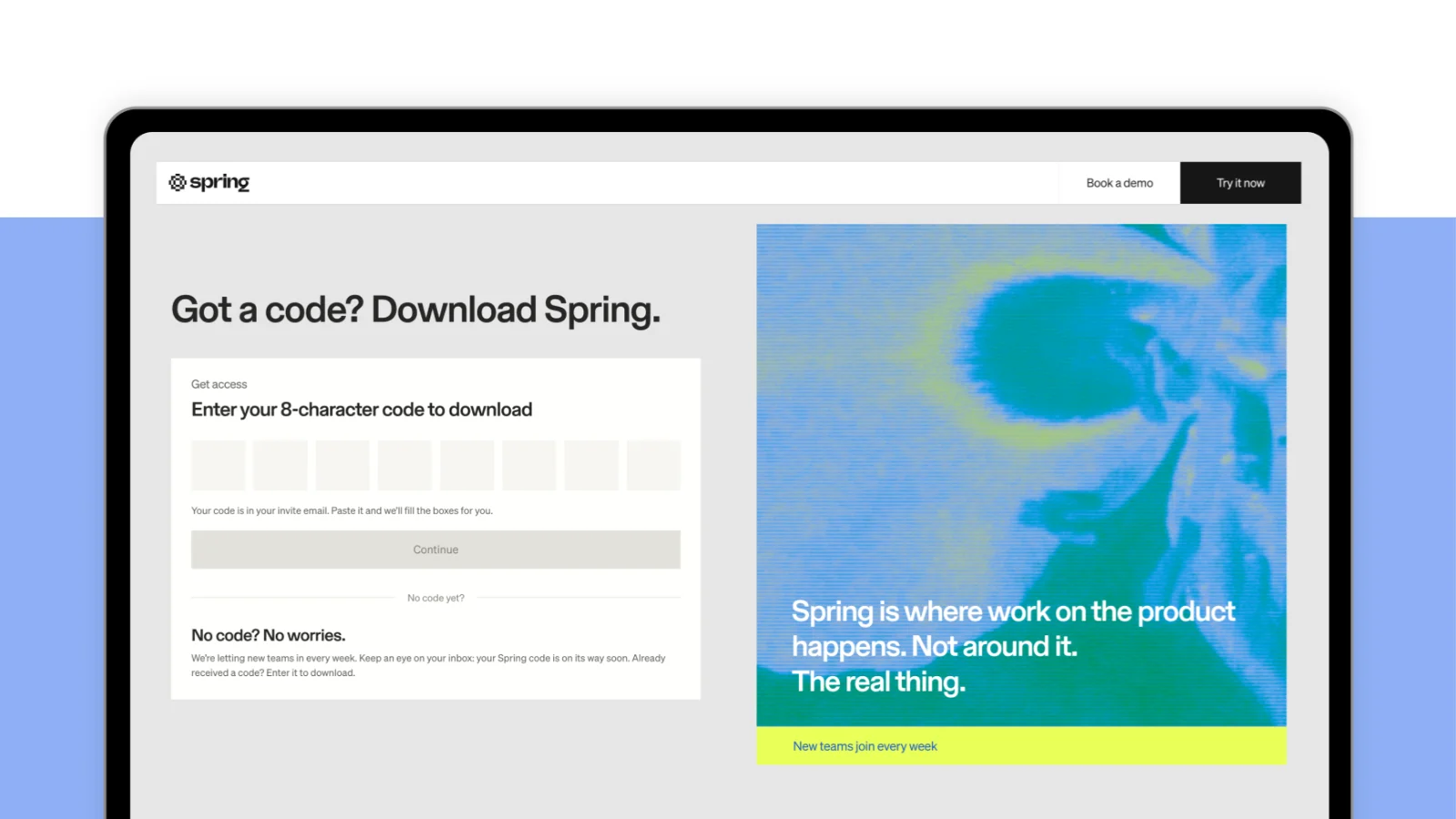
The day our leadership decided we needed a Get access page, it was live a few hours later. Nobody waited for anyone in the chain, because the chain no longer exists.
The decision
At Spring we work fast. Everyone does now. We were moving from selling to companies with a hands-on onboarding to letting anyone download Spring and get started on their own. Before opening it to everyone, leadership decided to let a first group of users in, to check the new onboarding flow.
That needed a page: people with a personal download code could download Spring, and everyone else could join a waiting list we'd notify when Spring opened to everyone.
Usually, a decision like that starts a relay. The PM writes the spec, a designer designs it, it goes back to the PM for review, back to the designer, and only then to development. Every step waits for the one before it.
You had one job. I had two.
In this case, I was both the designer and the PM. So the spec and the design happened in the same head, at the same time. And I did all of it in Spring, on our real website: the spec, the design, and defining every edge case.
When I opened the pull request, I worked out the last details with our developer, the things the page needed before it could go live. The page was live that afternoon, a few hours after the decision, before I left to pick up my kids from kindergarten.
Where the time actually goes
Writing the code was never the slow part. One engineering lead measured it: with AI, his team wrote code close to twice as fast, but lead time dropped only 4%. Writing code was only about 10% of it. The rest was waiting: on review, on decisions, on other teams and on approvals.
His team isn't unusual. Developers spend a small share of their time writing code:
16%of developers' time goes to coding (Atlassian, 3,500 developers)
11%of a typical week goes to coding (Microsoft, 484 developers)
10%of one team's lead time was coding (LeadDev)
The time goes to the waits between people. That's the part that changed for us.
We call it passing
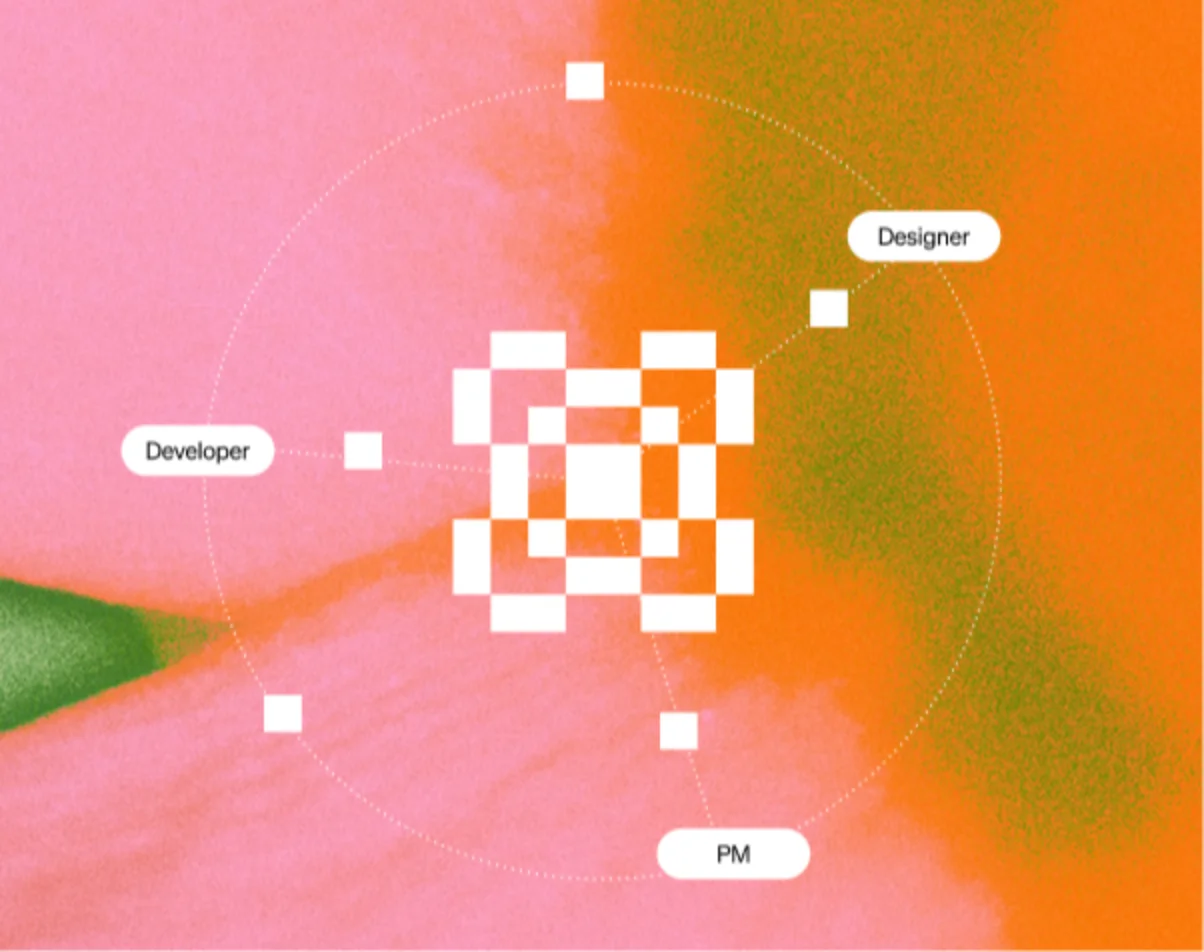
The process isn't a line anymore. At Spring we call it passing: like in a ball game, whoever is in the best position takes the work forward, and passes it when someone else is.
Sometimes one person takes a task end to end, like I did. Sometimes a developer starts thinking a feature through in Spring, then brings in a designer, then a PM, to finish it together. The work can start with anyone in the chain.
That works because we all work on the same platform, on the same code, with the same tools, and we can share a session with each other. Nobody hands over a document and waits. They pass the work itself.
It works in the other direction too. Before we even had a marketing website, we needed a page with a button to download Spring. Engineering led that one. One of our developers built the page and made it work, then applied a skill I'd built from our brand book, so the agent would follow our brand. Then he tagged me on the session to approve it.
What it takes
Passing only works if a few things stay true.
1. More roles doesn't mean more expertise. AI lets one person take on more of the jobs, but that doesn't make them as good as the people who do those jobs for a living. If a PM knows Figma really well, would we skip the designer? Probably not. The same goes for AI.
2. Use a design system. It's the best way I know to get results that are good and consistent, whoever on the team is building.
3. Nobody gets skipped unless they agree to it. Code always goes through a developer's review and approval, and the same should go for everyone else on the team. You skip someone only when they've agreed you can.
4. Follow your work to the end. The code you send gets reviewed by a developer, and sometimes fixed or changed. Read the comments on your pull request, and always test what goes live.